
Winter RV Stays: Why Private Land Makes More Sense Than Campgrounds




Room2Roam is your guide to RV travel adventures off the beaten path. Learn how to turn your land into a money-making opportunity by hosting RVers seeking unique, off-grid escapes. Get tips on RV hosting, chat with fellow hosts and RVers, and discover the latest on RV life from the CurbNTurf community.

Popular articles

FREE TO DOWNLOAD,
FREE TO USE.


Winter RV travel is a different kind of adventure. The roads are quieter. The crowds disappear. And if you've been trying to book a campground in February, you've probably noticed something frustrating: your options are limited.
Seasonal closures. Frozen hookups. Check-in policies that don't account for a snowstorm rolling in two hours before you arrive. It's not that traditional campgrounds are doing anything wrong—they were built for summer crowds. But if you're a full-timer, a snowbird moving south at your own pace, or a remote worker who doesn't follow a 9-to-5 schedule, those limitations can turn a peaceful trip into a logistical headache.
Here's the good news: private land doesn't have those problems.
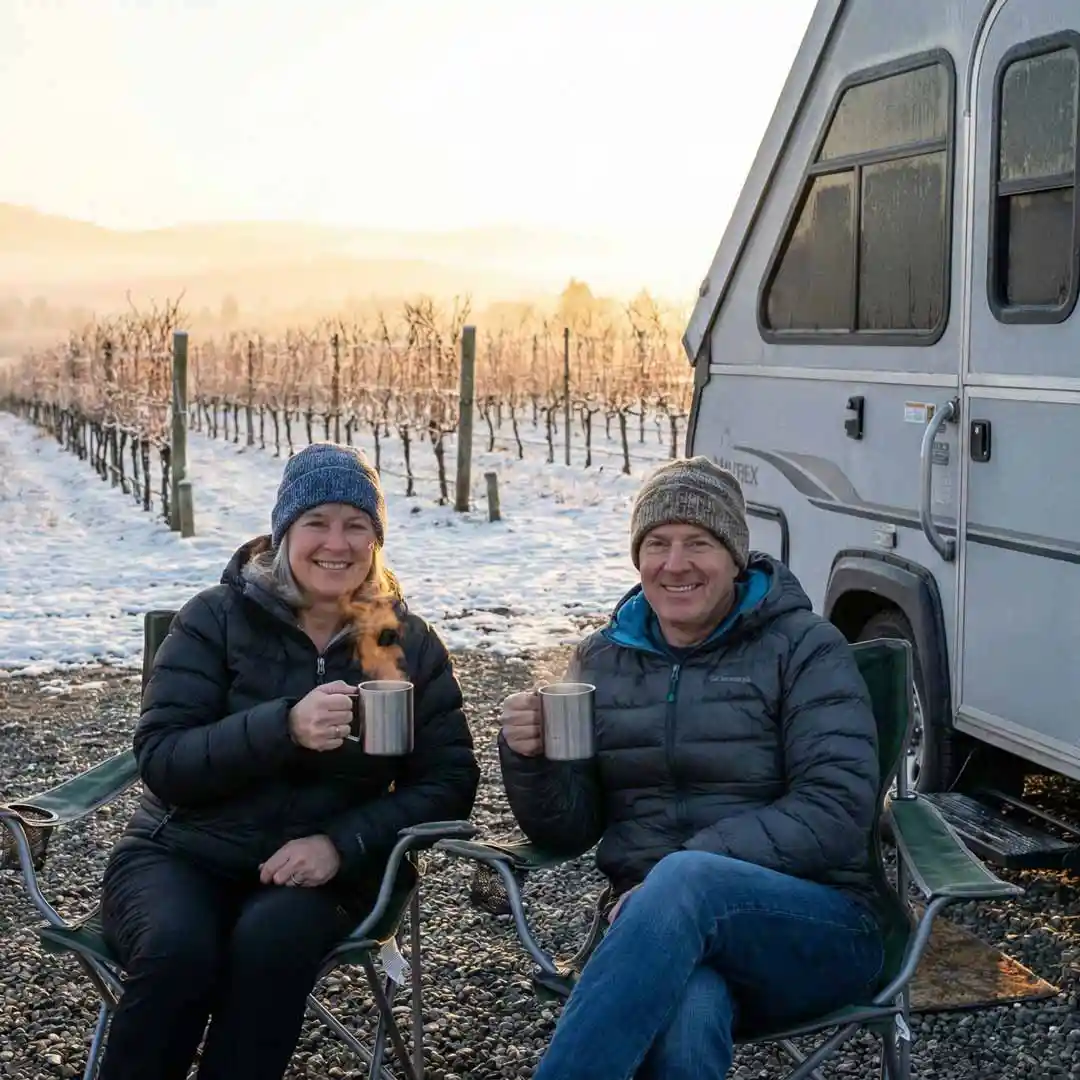
At CurbNTurf, we connect RV travelers with landowners across the country who are willing to share their property—driveways, farms, vineyards, open fields, and everything in between. And in winter, that flexibility matters more than ever.
Why campgrounds struggle in winter
Let me be clear—I'm not here to bash campgrounds. They serve a purpose, and many do it well. But the reality is that most were built for peak season, not for the RVer who wants to travel year-round.
Seasonal closures are the biggest issue. Many campgrounds, especially in northern states, shut down completely from November through March. They don't have the infrastructure to handle frozen pipes, icy roads, or reduced demand.
Limited services become the norm. Even campgrounds that stay open often reduce their offerings. Bathhouses close. Dump stations freeze. Staff is minimal—if there's anyone on-site at all.
Frozen hookups are a real concern. If you're relying on water hookups in sub-freezing temps, you're rolling the dice. Heat tape and insulation help, but plenty of RVers have learned the hard way that a campground's water line isn't always winterized properly.
Rigid policies don't flex for weather. Running behind because of a storm? That 2pm check-in window doesn't care. And if conditions get dangerous mid-stay, leaving early often means losing your reservation fee.
None of this is the campground's fault. It's just not what they're designed for.
Why private land works better in cold months
Private land operates differently. When you book a stay through CurbNTurf, you're not working with a front desk or an automated reservation system. You're talking directly to the landowner.
That direct communication changes everything.
Hosts are flexible with arrival times. Running behind because of weather? A quick message to your host is all it takes. No penalty fees. No awkward phone calls. Just two adults figuring it out together.
There's no pressure to use hookups. Many private sites are dry camping setups, which is actually ideal for winter. You're not depending on water lines that might freeze. You're running your own system—generator, solar, batteries—on your own terms.
Open areas make snow management easier. If you've ever tried to navigate a tight campground loop covered in ice and packed snow, you know what I mean. Private land often means more space, fewer obstacles, and easier access when conditions get tricky.
Hosts know their property. They know which spots drain well, where the wind breaks are, and what the driveway looks like after a storm. That local knowledge is invaluable when you're parking a 30-foot rig in unfamiliar territory.
Who benefits most from winter private land stays
Not everyone wants to RV in winter. But if you do, private land is probably your best option.
Full-time RVers already know that flexibility is everything. You're not tied to a summer schedule. You go where the work is, where the weather is tolerable, or wherever you feel like exploring. Private land gives you more choices—especially when campgrounds start closing their gates.
Snowbirds moving slowly benefit from having options along the route. Instead of racing to Arizona or Florida before the first freeze, you can take your time. A few nights here, a week there. Private hosts are often more accommodating of longer stays than traditional campgrounds. Learn more about finding unique stays on your snowbird route.
Remote workers need reliable, quiet spots where they can actually get work done. Private land delivers on both counts. No generator noise from the site next door. No campground activities interrupting your afternoon calls.
Couples who want quiet nights will love the solitude. Winter on private land means dark skies, no crowds, and the kind of peace that's hard to find at a packed RV resort.
What one traveler discovered last winter
Mark and Susan, full-timers from Oregon, had been struggling to find decent winter stays during their southbound trip last November.
"We hit three closed campgrounds in a row through Nevada," Mark told us. "It was getting frustrating. Then we found a CurbNTurf listing at a small ranch outside of Reno. The host, Tom, was incredibly helpful—he told us exactly where to park to avoid the wind, and even checked in the next morning to make sure we hadn't had any issues overnight."
Susan added: "It felt more like staying with a friend than booking a campsite. That's what we were missing at the big campgrounds—the human element."
That's the CurbNTurf difference. It's not just about finding a place to park. It's about connecting with real people who want your stay to go well.
Common questions about winter stays on private land
What about driveway access in snow?This is the most common concern, and it's valid. Before booking, message the host directly and ask about their road and driveway conditions during winter. Most hosts are honest about what their property can and can't handle. If they say "four-wheel drive recommended," take them seriously.
How do I communicate before arrival?CurbNTurf's platform makes it easy to message hosts directly. Start that conversation early—ideally before you book. Ask about weather, access, and anything else you're unsure about.
What if weather conditions change?This is where private land shines. Hosts understand that plans change. If a storm rolls in and you need to leave early—or stay longer—most are happy to work with you. It's a conversation, not a policy.
Is it safe to camp on someone's property?Yes. CurbNTurf has a detailed guest agreement that ensures transparency and protection for both guests and hosts. Plus, hosts can opt into additional insurance coverage. You're not camping in someone's backyard without rules—you're booking a legitimate stay with clear expectations.
Why winter is the perfect time to try CurbNTurf
Winter is actually the ideal season to discover what private land camping is all about.
More availability. With fewer travelers on the road, you'll find more open spots and greater flexibility in booking dates.
More host flexibility. Hosts are less rushed in the off-season. They have more time to answer questions, give directions, and make sure your stay goes smoothly.
Better conversations. When things aren't busy, there's room for real connection. Some of the best host-guest relationships we've seen started with a quiet winter stay.
A calmer way to travel. Winter RVing is slower by nature. Private land amplifies that calm. No lines. No crowds. No stress about hookups or check-in times.
The bottom line
Winter RV travel works best when the rules are flexible, communication is direct, and space matters more than amenities.
Private land checks all three boxes.
If you're a full-timer looking for better options, a snowbird moving at your own pace, or just someone who wants a quieter way to travel this winter, CurbNTurf can help you find a stay that actually fits the season.
Ready to find your next winter stay? Browse private land listings on CurbNTurf and book directly with hosts who understand what winter travelers need.
Got land that could work for winter travelers? Become a host and start earning from property you're not using. There's no cost to sign up, and you control your own bookings.
Winter doesn't have to mean putting your RV in storage. It can mean better travel—if you know where to look.


